
How Often Does a Septic Tank Need Pumping?
Every household is different, but the standard answer holds: a residential septic tank is typically pumped every 3 to 5 years, driven mostly by tank size and how many people live in the house. A family of six fills a tank faster than a retired couple in the same size home. Garbage disposals, long showers and laundry habits all push that timeline shorter. If you have never had the tank serviced and you are not sure of its size, that is the first thing Simi Valley Porta Pros checks before setting a schedule. We also handle related work you might not think of until it is urgent, like grease trap pumping for a home kitchen or rental unit, or a holding tank rental while a system is down. If you are building new and have not sited a system yet, our construction site services page covers what else you will need on site in the meantime, including a porta john rental for the crew.
What Are the Warning Signs My Septic Tank Needs Pumping?
Slow drains, gurgling pipes and standing water near the tank lid are the big three. Sewage odor in the yard or a suspiciously green, soggy patch of lawn over the drain field also means the tank is past due. If you notice any of these, do not wait for the next scheduled visit. Call for emergency septic service instead. For a full rundown of signs and what causes them, see our page on septic tank warning signs. Homeowners in Simi Valley on older systems, particularly ones installed before modern tank sizing standards, tend to see these signs sooner because the tanks were built smaller for the household load they now carry. If your system backs up entirely, a holding tank rental buys you time while we diagnose the problem, and if it happens on a weekend, our emergency septic service still runs.
What Does a Septic Pumping Service Include?
A standard visit includes locating and uncovering the tank lid, pumping out solids and liquid, and a basic check of the baffles and tank condition. We note anything that looks like a developing problem, like a cracked lid or a saturated drain field, and tell you before it becomes an emergency. This is different from a full septic tank cleaning, which goes further into scrubbing tank walls and inspecting components. If your property also has a grease interceptor, it needs its own attention: a grease interceptor gets pumped once fats, oils, grease and solids reach 25 percent of the liquid depth, which is a completely different service from residential tank pumping. Commercial kitchens in Simi Valley should ask about grease trap pumping on its own schedule, since letting it go past that 25 percent mark risks a clog or backup during service hours. For a broader look at how the whole process works and what to expect on service day, see how often to pump a septic tank.

How Much Does Septic Tank Pumping Cost?
Cost depends mostly on tank size and how far the truck has to travel. A standard day visit for typical residential pumping runs $150 to $300, and a lighter weekend call can run $50 to $150 depending on scope. Larger tanks or harder-to-reach lids push toward the higher end.
| Service | Duration | Typical Price Range |
|---|---|---|
| Septic tank pumping | Day visit | $150 to $300 |
| Septic tank pumping | Weekend call | $50 to $150 |
These figures come from our own pricing data across the region, not a quote for your specific property. Tank depth, driveway access and how recently the tank was last serviced all factor in. For a deeper cost breakdown by tank size and access difficulty, visit septic tank pumping cost. If you are comparing this against a temporary fix, note that a holding tank rental is priced and scoped completely differently since it is a rental, not a service call.
Do You Offer Emergency Septic Pumping in Simi Valley?
Yes. Backups do not wait for business hours, and neither do we. If a tank overflows or a line backs up into the house, call for emergency septic service and we will get a truck moving. Simi Valley sits close enough to several service points that response times stay reasonable: Santa Susana is 6.4 miles east, and Moorpark is 10.5 miles west, both within normal same-day range for our trucks. Simi Valley Porta Pros also covers Agoura Hills at 18.6 miles south, Fillmore at 21.4 miles northwest, and Calabasas at 22.6 miles southeast when emergencies come in from those areas. If the emergency is tied to a construction site rather than a home, our emergency porta potty rental service can also stand in fast while the septic issue gets resolved. Check our full service areas page for coverage details, or go straight to request a quote if you need someone out today.
What Is a Holding Tank and When Do I Need One?
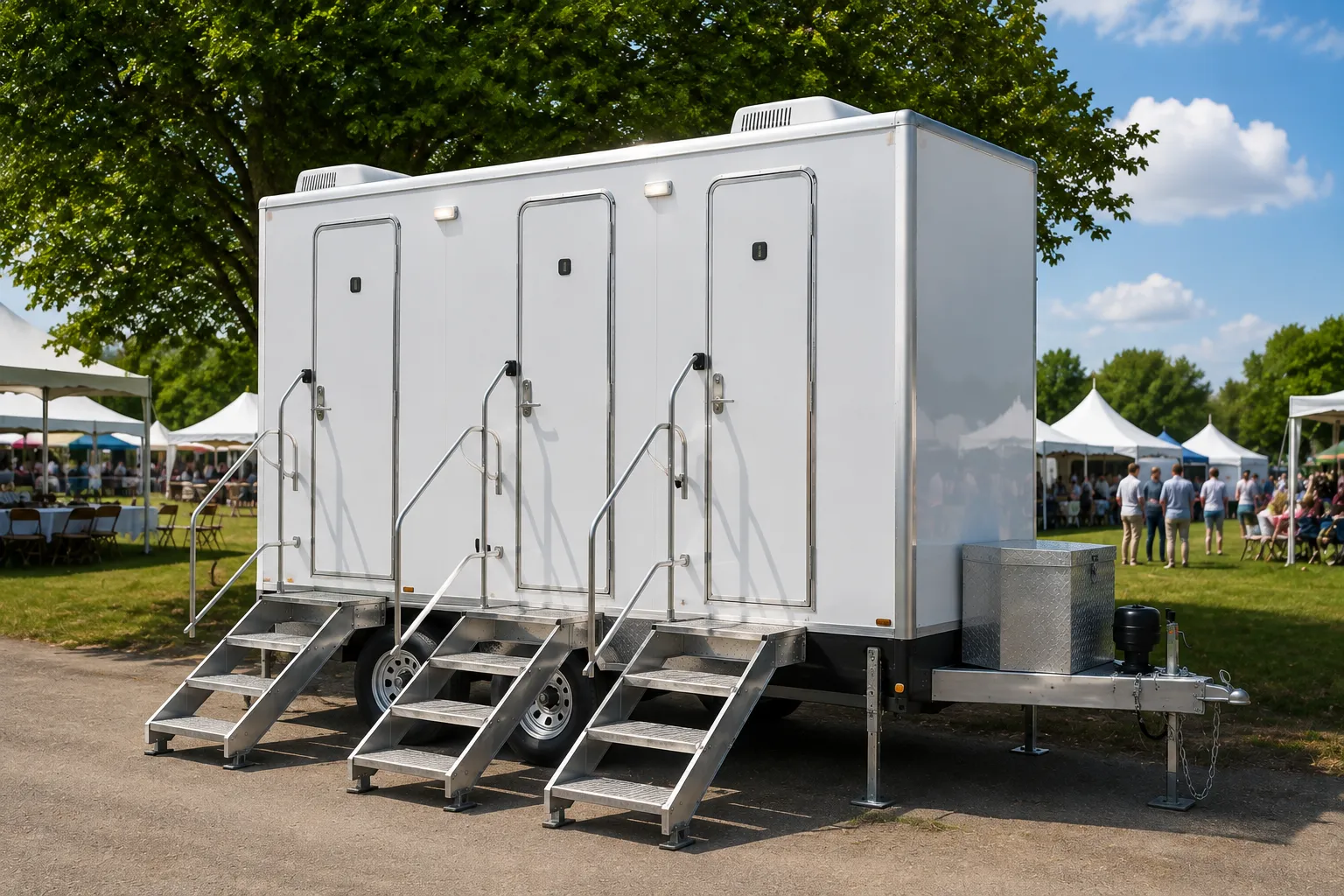
A holding tank is a temporary tank that stores wastewater when your permanent septic system is down for repair, replacement or during construction before a system is installed. Unlike a septic tank, it has no drain field and no treatment process; it just holds waste until it is pumped out. We rent these for homeowners mid-repair, for construction sites still waiting on permanent utilities, and for events with no sewer access. See holding tank rental for sizing and setup, and pair it with a portable restroom rental if the whole property is without working plumbing. If your situation involves a construction crew rather than a single household, look at construction site services for the full list of what a job site typically needs, from temporary fencing to handwashing station rental.
Septic service is one piece of what Simi Valley Porta Pros handles across the city. If you are also running a job site, event or renovation, check porta potty rental in Simi Valley or the main Porta Potty Rental in Simi Valley, CA page for the rest of what we offer, including roll-off dumpster rental, storage container rental and restroom trailer rental. For homeowners tackling a renovation that involves both a dumpster and a porta potty, our home renovation porta potty page covers that combination directly.
How much does septic tank pumping cost near me in Simi Valley?
A standard day visit typically runs $150 to $300, with a lighter weekend call from $50 to $150. Tank size, access and time since the last pumping all move that number. See septic tank pumping cost for a full breakdown by scenario.
How often should a 1,000 gallon septic tank be pumped?
A 1,000 gallon tank generally needs pumping every 3 to 5 years, but household size drives that faster or slower. Bigger families and heavy water use shorten the interval. When in doubt, schedule an inspection rather than guessing.
What are the warning signs I need septic pumping now?
Slow drains, gurgling pipes, sewage odor and soggy patches over the drain field all mean the tank is due. Do not wait once you notice these. Call emergency septic service if backup is already happening inside the house.
Do you offer emergency septic pumping in Simi Valley?
Yes, we run emergency calls throughout Simi Valley and nearby communities including Santa Susana and Moorpark. Response time depends on distance and current truck location. Request service through emergency septic service any time.
What is the difference between septic pumping and septic cleaning?
Pumping removes the accumulated solids and liquid from the tank. Cleaning goes further, scrubbing tank walls and checking baffles and components more thoroughly. Most homeowners only need routine pumping; see septic tank cleaning if it has been many years since either service.
Can I rent a holding tank instead of pumping right away?
Yes, if your system is down for repair or replacement, a holding tank keeps the household running while you wait. It stores wastewater temporarily with no drain field involved. Visit holding tank rental for sizing and delivery details.
Next step
Get a delivery date
Tell us the address, the dates and the headcount. We size the order and confirm the route.